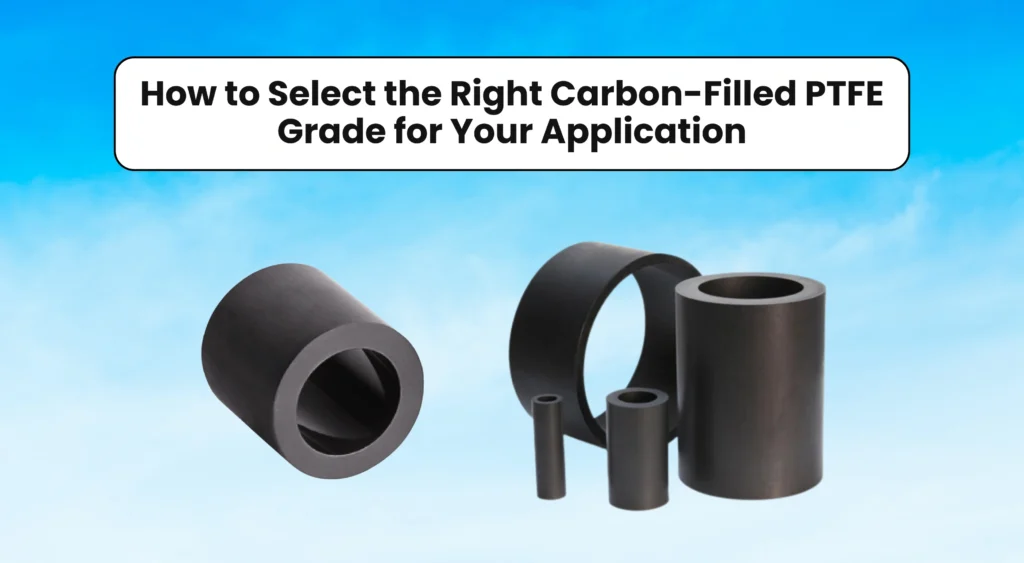
Carbon-filled PTFE is the most widely used high-performance polymer material in industrial appl the samications. With good wear resistance, low friction, and enhanced mechanical properties, carbon-filled PTFE grades are the most widely used material in seals, bearings, valve seats, and electrical components.
But none of the carbon-filled PTFE grades are. Selecting the appropriate grade of carbon-filled PTFE can have a significant impact on performance, life, and cost. In this brief guide, we will tell you everything you need to know to pick the best grade for your application.
What is Carbon-filled PTFE?
Carbon-filled PTFE is a virgin PTFE with carbon or graphite fillers. These fillers enhance the mechanical and thermal properties of PTFE while preserving its outstanding chemical resistance and low friction.
With the addition of carbon, PTFE basically becomes:
- More wear-resistant
- Dimensional stable
- Electrically conductive or semiconductive
- Good load-carrying capacity
This property makes carbon-filled PTFE the preferred choice for abrasive applications and in metallurgy, in aggressive chemical media, and in machinery and plant abrasion.
Important Properties of Carbon-Filled PTFE
You need to know some of the properties of carbon-filled PTFE before choosing the grade.
- Enhanced Wear Resistance: Wear of carbon filler is minimal compared with wear of virgin PTFE. This is critical for moving parts like bushings and bearings.
- Reduced Friction Coefficient: Carbon-filled PTFE retains the natural low friction of PTFE, which can contribute to reducing energy loss and heat generation.
- Greater Capacity to Bear Loads: With carbon reinforcement, the compressive strength is increased, enabling the material to sustain higher mechanical loads.
- Electrical Conductivity: Certain grades of carbon-filled PTFE are electrostatic dissipative or conductive, a factor that is salient within electronics and explosives industries.
- Thermal Stability: Carbon-filled PTFE has good temperature and thermal shock resistance.
Different Types of Carbon-Filled PTFE Grades
The types and amounts of fillers differ among the carbon-filled PTFE grades.
- PTFE with Carbon Only
- Made with pure carbon powder
- It also provides very good wear resistance.
- Ideal for dry-running conditions.
Most Suitable for: Bearings, piston rings, and wear strips.
- PTFE with Carbon and Graphite
- Enhanced lubrication qualities
- Less friction than the purely carbon-based grades
- Suitable for continuous motion
Recommended For: Seals, sliding plates, valve components
- PTFE with Carbon and Glass Fiber
- Higher strength and better dimensional stability
- Resistant to deformation
Ideal For: Building blocks, Heavy-Load Components, and Co.
- Conductive Carbon-Filled PTFE
- For electrical conductivity applications
- Avoids accumulation of static charges
Most suitable for: Electric Insulation Components and High Risk Areas.
Carbon-Filled PTFE vs Virgin PTFE
Understanding the difference between virgin PTFE and carbon-filled PTFE helps in choosing the right material for your application. While both offer excellent chemical resistance, their performance varies greatly in mechanical and wear-related conditions.
| Property | Virgin PTFE | Carbon-Filled PTFE |
| Wear Resistance | Low | High |
| Load Capacity | Limited | Improved |
| Electrical Conductivity | Insulator | Semi-conductive or conductive |
| Cost | Lower | Slightly higher |
| Lifespan | Shorter in moving parts | Longer |
Explore the difference between virgin PTFE and filled PTFE and understand which material is best suited for your application.
How to Choose the Appropriate Carbon-Filled PTFE Grade
There are several critical performance and operating parameters that affect the selection of the appropriate carbon-filled PTFE grade. This consideration will enable you to avoid premature failure and inefficient operation.
1. Application Environment
In the first place, learn what the application is.
- Consider the following:
- Operating temperature range
- Type of chemical exposure
- Use indoors or outdoors
Carbon-filled PTFE is acceptable for use in aggressive chemical environments, but always verify compatibility if you will be exposed to extreme chemicals.
2. Load and Pressure Requirements
Load and pressure influence the choice of grade. For very high load applications:
- Choose the grades with higher carbon content.
- Look for improved compressive strength and creep resistance.e
For light loads of work:
- Grades of PTFE with lower filler content are generally enough. nt
- It enables you to balance performance with cost
3. Wear and Friction Requirements
Wear resistance, if your process involves movement, is essential.
- Continuous sliding applications
- High-speed or rotating parts
Under these conditions, carbon graphite-filled PTFE provides superior self-lubricity with the lowest friction and instrumentation wear.
4. Electrical Specifications
Where static electricity is a potential problem in use:
- Select from conductive carbon-filled PTFE grades.
- Prevents Static Charge Accumulation and Discharge
- Electronic parts
- Fuel systems
Hazardous or explosive atmospheres
5. Dimensional Stability
When looking for precision turned parts:
- Choose grades reinforced with carbon and glass fillers.
- Reduces creep, distortion, and changes in dimensions
This enables stable quality for the long term.
6. Cost and Lifecycle Value
Although carbon-filled PTFE may have a higher initial cost, it offers significant long-term benefits:
- Longer service life
- Reduced maintenance requirements
- Lower downtime and replacement costs
As a result, carbon-filled PTFE grades deliver excellent lifecycle value and are often more cost-effective over time.
What are the benefits of Carbon Filled PTFE?
The benefits and performance characteristics of carbon-filled PTFE make it an ideal material for challenging industry applications. This material offers a reliable and long-term performance by utilizing the chemical resistance of PTFE and the strength of carbon fillers.
Benefits of Carbon-Filled PTFE
- Long Service Life: Components can survive longer in constant or heavily loaded operation due to the enhanced wear resistance.
- Outstanding Wear Resistance: Carbon fillers prevent surface wear to a great extent, which makes the material suitable for sliding and rotating components.
- Reduced maintenance costs: The longer life of a single component allows for a reduction of the frequency of replacement, maintenance effort, and downtime.
- Consistent Performance Under Pressure: Under pressure, carbon-filled PTFE does not collapse, nor lose its strength, thus providing stable performance in mechanical applications.
- Good Chemical and Thermal Resistance: The material is resistant to the majority of chemicals and is very well applicable over a broad temperature range.
PTFE sheets offer excellent chemical resistance, high temperature stability, low friction, and strong electrical insulation, making them ideal for sealing and industrial applications. Explore and learn the benefits of using PTFE sheets .
Mistakes to Avoid When Selecting Carbon-Filled PTFE
Selecting the wrong carbon-filled PTFE grade can lead to poor performance, frequent failures, and higher long-term costs. Avoid these common mistakes to ensure the best results for your application.
- Choosing based on price alone
- Ignoring electrical requirements
- Overlooking operating conditions
- Using a generic grade for specialized applications
Final Thoughts
Selecting the suitable grade of carbon-filled PTFE is not only a matter of performance, but also a matter of safety and long-term cost efficiency. Proper material choice can greatly enhance wear resistance, load carrying capacity, and reliability of operation in a wide spectrum of industrial environments.
At hindustanpolymer.com, we offer the best quality carbon-filled PTFE grades and world-class technical assistance in making your application solutions. Rely on us for dependable materials, consistent quality, and performance you can take to the bank. Enhance your application performance with the right carbon-filled PTFE Choices today!