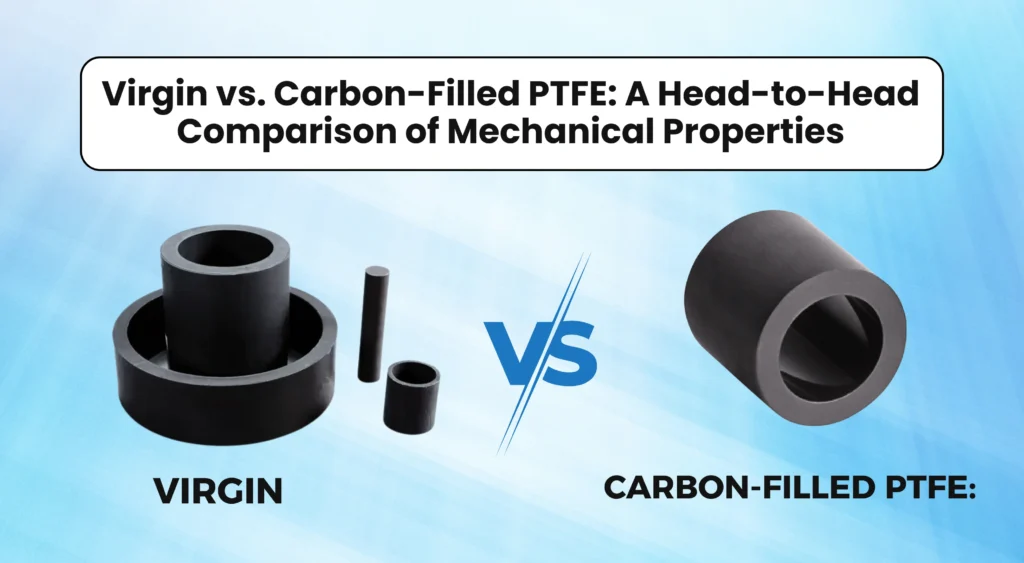
In the selection of PTFE material for industrial or engineering applications, Virgin PTFE and Carbon-Filled PTFE (sometimes known as Graphite-Filled) are among the most frequently encountered options. The two substances continue to be very popular because of their outstanding chemical resistance, low friction, and high durability; Nonetheless, the mechanical properties, thermal stability, and water resistance of the two differ significantly.
This guide compares mechanical properties (strength, stiffness, wear, creep, friction, thermal behaviour) and application fit to help you make an informed selection.
Virgin PTFE: Overview and Characteristics
Virgin PTFE: excellent chemical resistance, lowest coefficient of friction, good electrical properties (but not antistatic), moderate wear resistance, and poor load carrying capacity – high cold flow (creep). Good for chemical seals, low-load sliding applications, and electrical insulators.
Key Features of Virgin PTFE:
- Purity: no fillers, ideal for food, medical, and pharmaceutical use.
- Chemical resistance: virtually immune to all chemicals except molten alkali metals and elemental fluorine.
- High/Low Temperature Resistance: Strong and consistent resistance between -200~260°C.
- Low Abrasion & Anti-Stick Properties: Great for use on areas with little to no adhesion.
- Electric Insulation: Outstanding dielectric properties, which remain constant even at high frequency.
Mechanical Properties of Virgin PTFE
| Property | Typical Value |
|---|---|
| Tensile Strength | 20–30 MPa |
| Elongation at Break | 250–400% |
| Compressive Strength | 12–20 MPa |
| Hardness (Shore D) | 50–55 |
| Density | 2.15 g/cm³ |
| Coefficient of Friction | 0.05–0.10 |
Carbon-Filled PTFE: Overview and Characteristics
Carbon-filled PTFE: enhanced wear resistance, compressive strength, dimensional stability, and thermal conductance, whilst minimal increase in friction coefficients, together with a marginal reduction in electrical insulation construction. Great for bearings, heavy-wearing bushings, and load-bearing slide parts.
For detailed insights into its benefits and applications, explore our Complete Guide to Carbon-Filled PTFE.
Key Features of Carbon-Filled PTFE
- Better Wear Resistance: Ideal for sliding or dynamic sealing applications.
- Compressive Strength Greater: Stands up to packing without being crushed.
- Better Heat Dissipation: Helps cool your brakes in hard use.
- Less Cold Flow: Less deformation under constant load.
- Lower Friction (using Graphite Carbon Mix): Stays self-lubricating.
Mechanical Properties of Carbon-Filled PTFE
| Property | Typical Value |
|---|---|
| Tensile Strength | 18–25 MPa |
| Elongation at Break | 75–150% |
| Compressive Strength | 25–35 MPa |
| Hardness (Shore D) | 60–70 |
| Density | 2.10–2.20 g/cm³ |
| Coefficient of Friction | 0.07–0.15 |
Performance Insights
Mechanical Strength and Wear
- Carbon-filled PTFE has much higher wear resistance and compressive strength than Virgin PTFE. This makes it ideal for bushings, seals, and valve seats exposed to mechanical stress.
- Virgin PTFE, while strong in chemical resistance, can creep or deform under prolonged pressure or heat.
Friction and Lubrication
- Virgin PTFE offers the lowest friction coefficient, making it extremely slippery. However, it tends to wear faster.
- Carbon-Filled PTFE maintains a balanced friction-to-wear ratio, performing better in dynamic or sliding applications, especially where dry lubrication is preferred.
Thermal Stability
- Both materials can withstand hot temperatures, but Carbon-Filled PTFE excels in thermal cycling and heat transfer as a result of the carbon particles being conductive.
Dimensional Stability
- PTFE filled with carbon has reduced thermal expansion and greatly improved dimensional stability, which is necessary in high-precision mechanical components under heat and load.
- Unfilled PTFE can expand or lose some shape when heated, and that may take away precision.
Chemical Resistance
- Virgin PTFE is still the best possible fluoropolymer for chemical resistance in ultra-pure water and clean room applications in the pharmaceutical and food products industries.
- Carbon-filled PTFE is largely chemical resistant, but may cause some damage to itself over a period of time in oxidizing environments.
Electrical Properties
- Virgin PTFE has excellent electrical insulating properties, great for use in wire insulation, gaskets, and standoffs.
Applications of Virgin PTFE
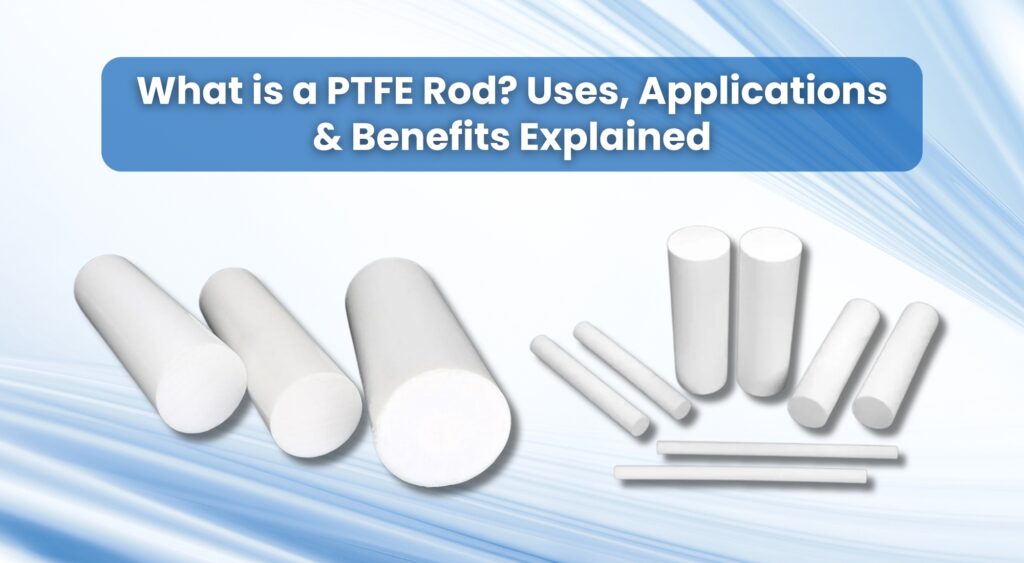
Virgin PTFE (Polytetrafluoroethylene) is generally white and has one of the highest coefficients of friction, good heat and chemical resistance, and a high dielectric strength. It is extremely low in water absorption and possesses a low surface energy. Its high resistance to extreme temperatures and aggressive chemicals, great durability, flexibility, and long life span make it the perfect choice for a vacancy safety alarm switch in any harsh environment.
Common Applications Include:
- Food & Beverage Processing Equipment: Seals, gaskets, and liners used in manufacturing to protect product quality and hygiene.
- Pharmaceutical Machine: Suitable for non-reactive parts in drug production and packaging systems.
- Chemical Lining/Gaskets: Excellent for use in chemical tanks, valves, and drinking water systems.
- Electrical Insulation & Cable Coatings: Delivers maximum dielectric strength for high-performance electrical and electronic components.
- Non-Stick and Anti-Friction Components: Used in machinery parts like slides, bearings, and guides to reduce friction and wear.
- Cryogenic Seals and Bearings: Maintain flexibility and sealing efficiency even at extremely low temperatures.
Overall, Virgin PTFE’s unique combination of purity, strength, and stability makes it an indispensable material in high-performance engineering and manufacturing environments.
Advantages and Limitations at a Glance
Knowing the limitations and benefits of Virgin PTFE and Carbon-Filled PTFE makes it possible to select the best material for particular industrial uses. Here is a quick comparison of the pros and cons
Virgin PTFE: Pros and Cons
Advantages:
- Chemically Inert: Resistant to most chemicals and solvents, offering long-term stability.
- Non-Stick & Dielectric: Great insulation and easy to clean.
- Very Low Friction: Provides excellent lubrication in sliding parts.
- FDA-Verified: Certified safe for food, beverage, and medication use.
Limitations:
- Poor Wear Resistance: Can degrade faster under friction or mechanical stress.
- Deforms Under Pressure (Creep): Not ideal for high-load applications.
- Limited Load-Bearing Capacity: Best suited for static or low-pressure environments.
Carbon-Filled PTFE: Pros and Cons
Advantages:
- Outstanding Wear & Load Resistance: Superior performance in mechanical bearing and fixture applications.
- Improved Dimensional Stability: Holds dimension under load.
- Enhanced Thermal Conductivity: Efficiently dissipates heat from areas of high friction.
- Great for Moving Parts: Bearings, seals, and piston rings.
Limitations:
- Low Chemical and Electrical Insulation: Not as chemically resistant.
- Higher Friction Coefficient: Not as slick as Virgin PTFE.
- Not Recommended for Food or Medical Use: Additives prevent FDA approval.
Virgin PTFE is perfect for applications involving chemicals, food, and electricity, whereas Carbon-Filled PTFE is better suited for mechanical and high-load situations. The selection of the proper grade relies on your priority between purity and performance.
Final Verdict: Which One Should You Choose?
Choose virgin PTFE if you need purity, chemical inertness, and insulation for your application. It’s the favorite of industries like food, pharmaceutical, and electronics. But if you require strength, wear resistance , and thermal performance, carbon-filled PTFE is your victor.
It is the industrial-grade Carbon-Filled PTFE ideal for seals, bearings, and high-load applications. Both materials have unique strengths. Pals® is the right choice — for longer machinery life, less maintenance, and optimal performance.
For a deeper understanding of how these grades differ from unfilled PTFE, read our detailed comparison: Virgin PTFE vs. Carbon-Filled PTFE Thrust Pads.
Conclusion
Virgin and carbon-filled PTFE are strong, effective materials; it all depends on the problem you’re solving. When super low friction and the best electrical insulation are what you need, virgin PTFE is the obvious choice.
If you have a wear issue, requirement for load stability, and heat or friction issues added to the product, carbon-filled PTFE could outperform virgin material and give you a longer life part. If you’re unsure, ask for data sheets, do tests specific to the application (wear resistance, creep behavior, coefficient of friction under pressure), and consider purchase price versus total cost of ownership.
That’s how you get from “PTFE is awesome” to “this particular grade of PTFE is the perfect match.” Virgin PTFE is for purity, flexure, and low friction, while carbon-filled PTFE provides strength, wear resistance, and long service life.
Frequently Asked Questions
Is Carbon-Filled PTFE safe for food contact?
No. The carbon fillers can contaminate or discolor products, so they’re not approved for food or pharmaceutical use. Use Virgin PTFE instead.
Can Carbon-Filled PTFE conduct electricity?
Yes, partially. Carbon fillers increase their conductivity, which is useful in static-dissipative applications.
Which PTFE grade lasts longer under friction?
Carbon-filled PTFE offers much better wear resistance and longer service life in frictional or load-bearing conditions.
Can I replace Virgin PTFE with Carbon-Filled PTFE?
Only if the application does not require high chemical purity or electrical insulation. Otherwise, use Virgin PTFE.
What are other PTFE-filled grades?
Common alternatives include Glass-Filled PTFE, Bronze-Filled PTFE, Graphite-Filled PTFE, and MoS₂-Filled PTFE—each offering unique performance advantages.